On the GOP ticket.

An anonymous reader asks: “How do not so Conservative candidates like Romney/Ryan get picked with such huge influences like the Tea Party movement?”

How did the GOP end up with a seemingly moderate or weak conservative ticket in spite of the Tea Party’s influence? I assume you’re referring to economic conservatism, because both candidates are socially conservative (Ryan solidly, Romney squishily).

First, math: Tea Partiers do not constitute a majority of Republicans. But this alone doesn’t explain it, because moderates (e.g., Romney, at least during most of his career) also do not constitute a majority of Republicans.

Second, the Tea Party is relatively new, which means their favorite guys need to gain experience and exposure before they can reasonably be expected to make a worthwhile run for the White House.

I think that four of the GOP hopefuls could reasonably be called Tea Party favorites: Ron Paul, Michele Bachmann, Herman Cain, and Rick Perry. Ron Paul was too libertarian and too much of a longshot to get much support from the rest of the GOP. The other three had fatal flaws as campaigners (aside from their other flaws): Bachmann looked and acted like an alien in a human costume, Cain was sunk by a sex scandal, and Perry was the worst debater on Earth. From the Tea Party’s perspective, it was a hastily and shoddily assembled field.

So most of the Republicans who were in a stronger position to run for President weren’t Tea Partiers, and never faced any real pressure to rein in government spending, thus they don’t have very conservative voting records on economic issues (Ron Paul’s the exception). But in 2016, there will probably be more Tea Partiers ready to run for President– either to succeed Obama or to challenge Romney in the primaries.

O glorious day!

At long last, a worthy successor to Kung Fu Chess has arrived! It is called “Tempest Chess,” can be found at tempestchess.com, and it requires no download.

What was Kung Fu Chess, you might ask? Here’s what I wrote in “gg” a few years ago:

Kung Fu Chess is (I say “is” in the hopes that the game is still available somewhere out there, perhaps at a different website, perhaps waiting to be relaunched on the old website) chess without turns. You can move as many pieces as you want without waiting for your opponent to move his. The only restriction is that once you’ve moved a piece, you have to wait ten seconds before moving it again. You can dodge attacking pieces, you can capture other pieces with a piece already in motion. Throw in some kung fu sounds whenever you kill an opponent’s piece, some cheesy techno in the background, and animals wearing martial arts outfits as your avatars, and you’ve got the greatest, geekiest, time-killingest online arcade game of all time. Here’s a YouTube sample of a high-rated game, minus the sound effects and plus some other background music.

Tempest Chess is the same thing, but without the kung fu trappings and the animal avatars.

This is probably the worst thing that could possibly happen to my productivity right before the school year begins, but such is life. Stop what you’re doing, get over to tempestchess.com and play, dammit.

On the installation of my abutment.

Today I paid a visit to my dental surgeon to get the cover screw taken out of slot #31, and replaced by a dental abutment, which itself will soon be covered by a crown. In the meantime, it is covered by a cylindrical guard that looks like a breath mint. I’m not sure what’s stranger: seeing what looks like a thumbtack pressed into my gums, or seeing what looks like a breath mint protruding from my gums.

Problem: apparently one of my top molars, the one directly above all the action, has descended “just a hair,” which could affect the fit of the abutment. When the surgeon told me this, I assumed this meant he would put that information in his notes to my dentist, so that she would take it into consideration when molding my crown. Nope. Apparently it’s easier to shave off the bottom of the descending tooth– which was minding its own business, not bothering anybody– to make room for the crown. The surgeon said it wouldn’t hurt, and it didn’t… but it took four nerve-wracking attempts sans anesthetic to get just the right amount shaved off.

Grinding down one of the homegrown fellas to make room for some synthetic interloper is a bold and perhaps necessary move, but it’s putting team chemistry at risk. Once we get the new crown installed, we’ll run through a few steaks, some potatoes, maybe some lobster, a decent bottle of red, and then we’ll have a better sense of whether this was the right move.

Vacation ’12, part 2C: New Orleans, concluded.

And now for the last few good pictures I took in New Orleans.

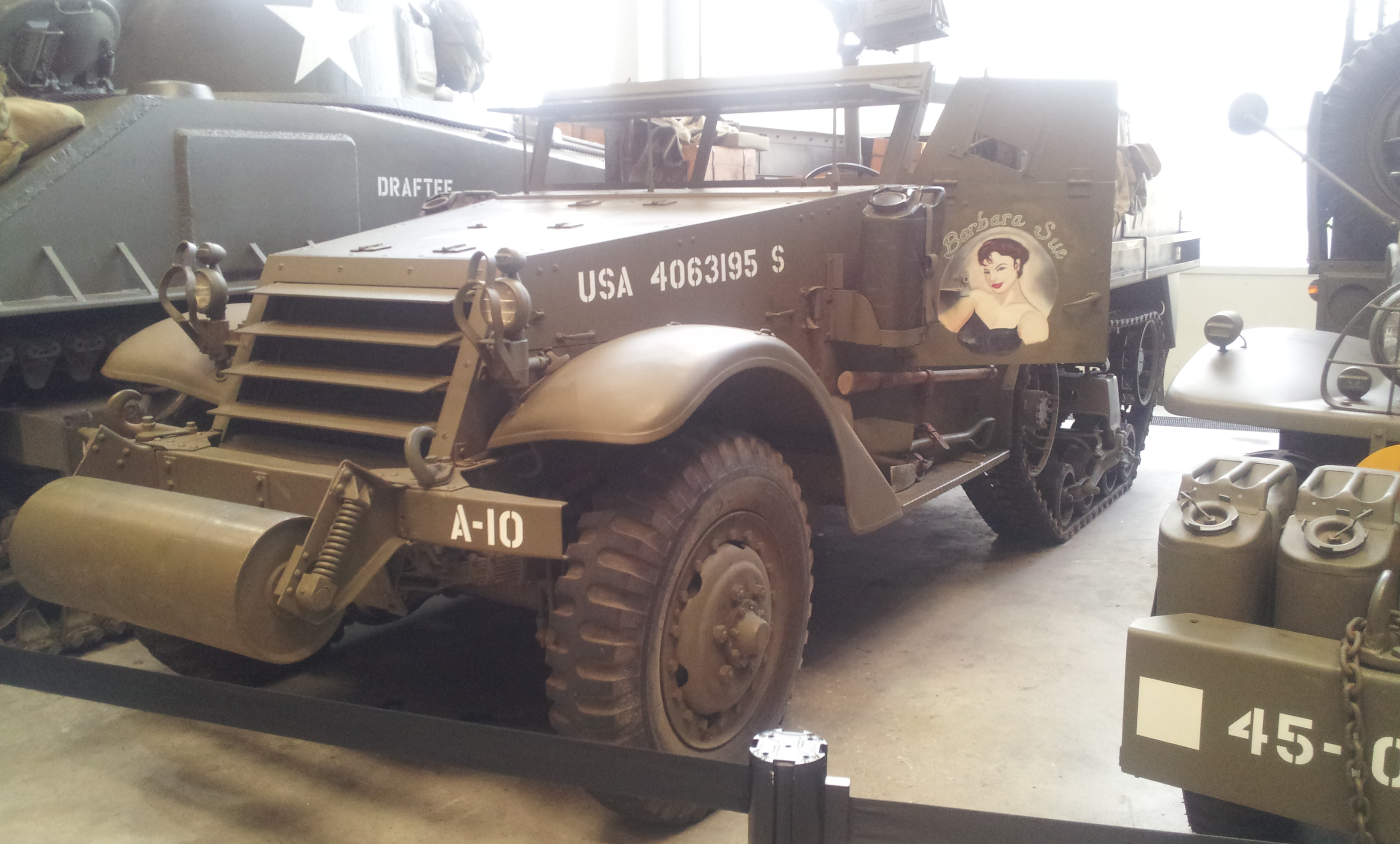
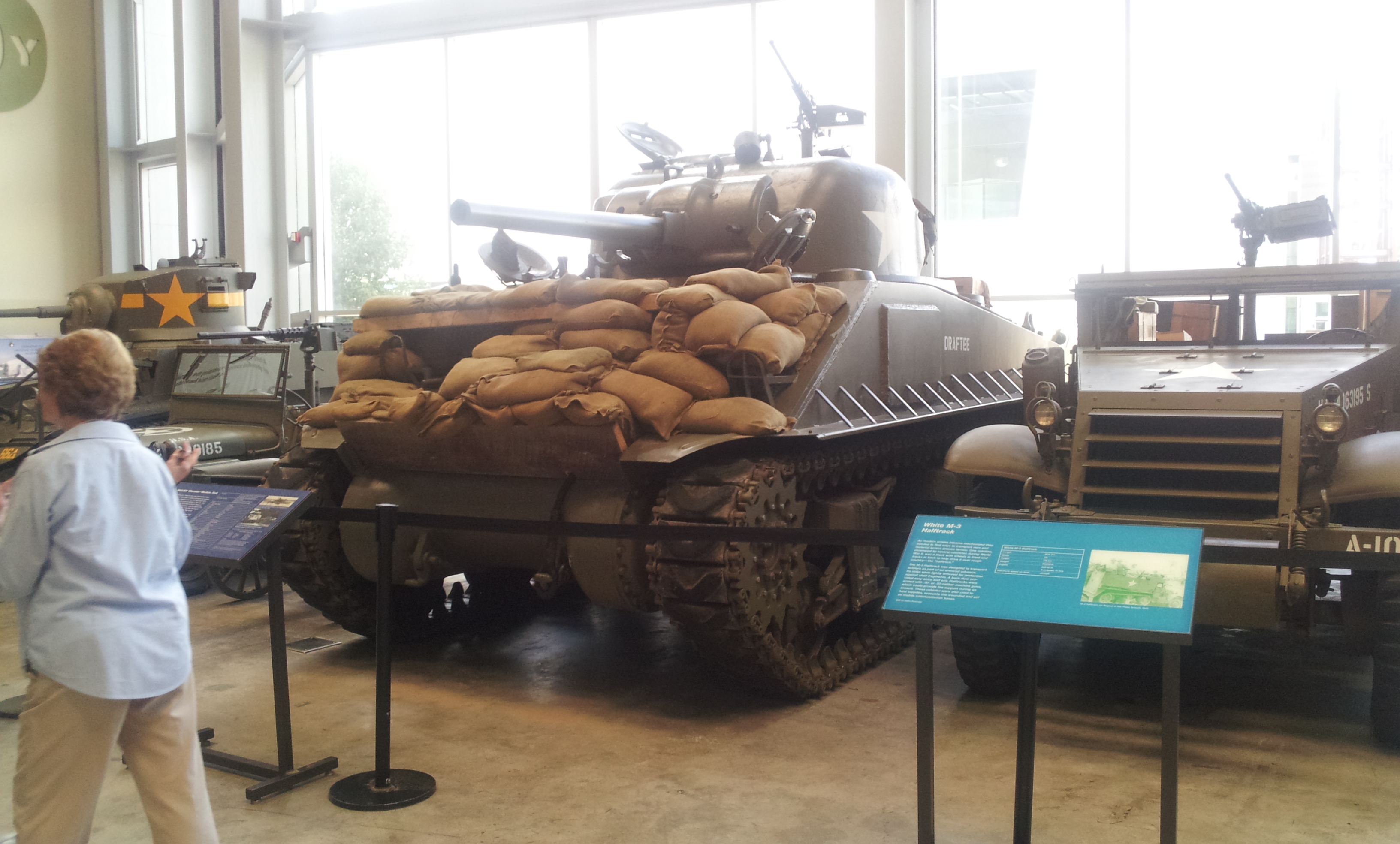
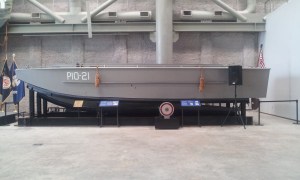
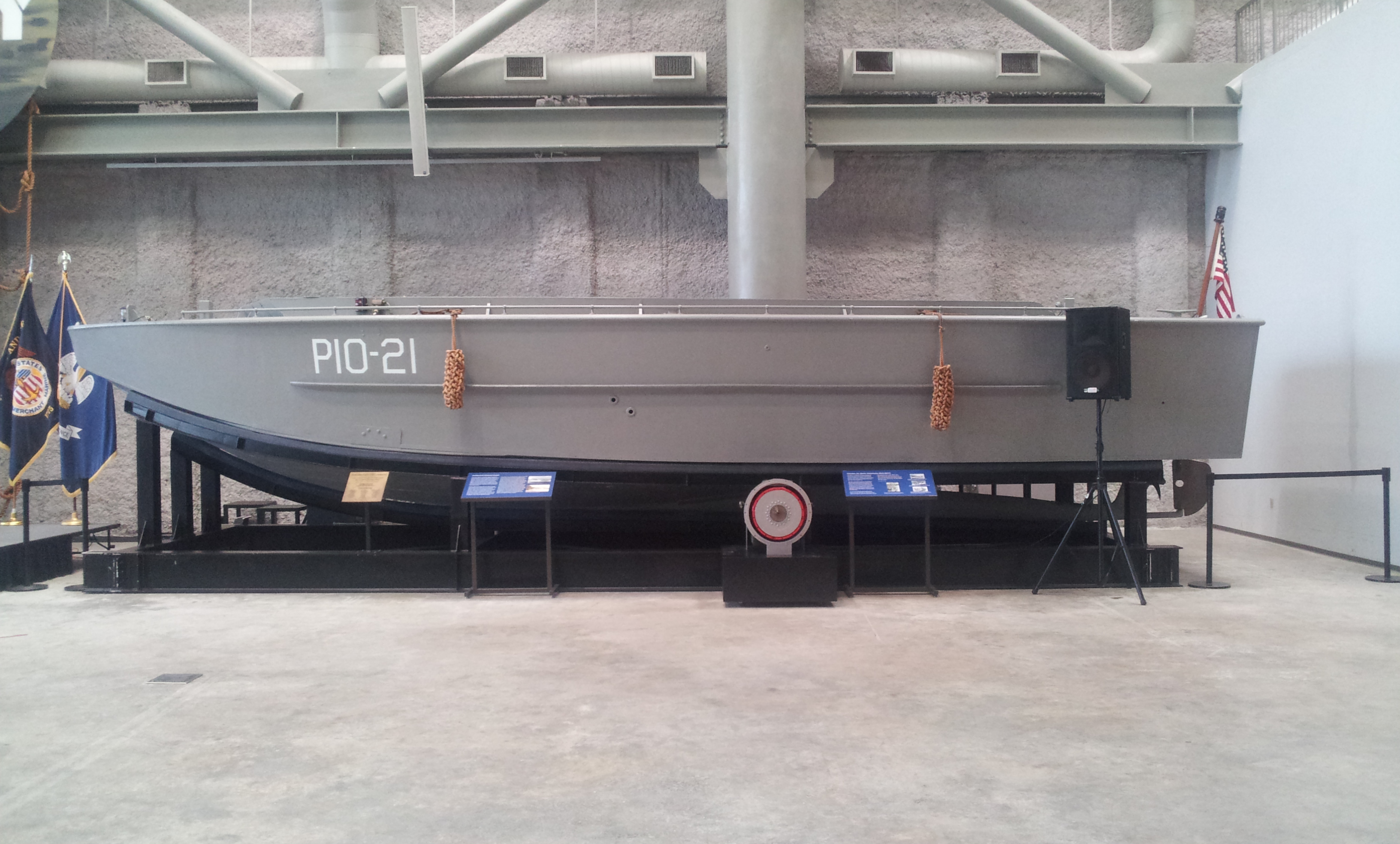
The next morning we went to the National World War II Museum. This museum is in New Orleans because of one Andrew Jackson Higgins, whose company designed and built an overwhelming majority of naval craft in World War II, most of which were the large landing craft pictured below.
An M1 Howizter, 75 mm:

A .30-caliber water-cooled Browning:

An M3 Half-Track. Wheels in the front, treads in the back:

An M3A1 “Stuart” light tank:
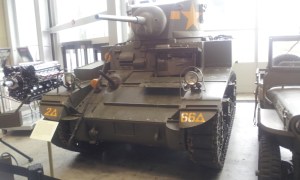
An M4A3E9 medium tank… the “Sherman”:

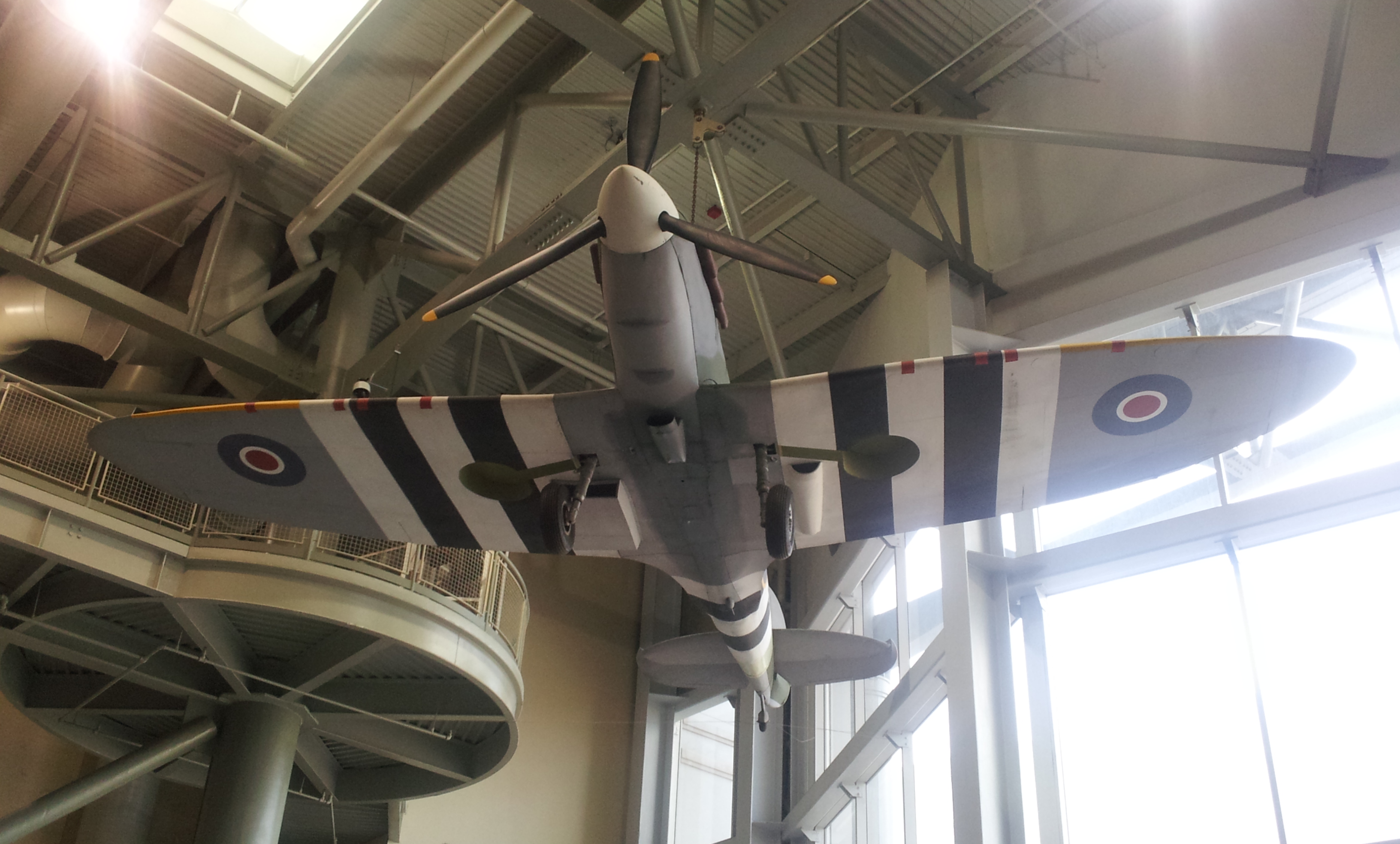
And hanging from the ceilings were three planes that saw real-life action in World War II. In the corner of the ceiling nearest the entrance, presumably on loan from the RAF, was a Spitfire. These were the planes that flew against the Luftwaffe in the Battle of Britain.
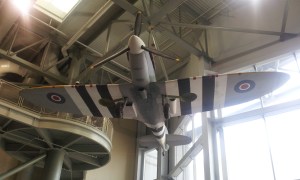
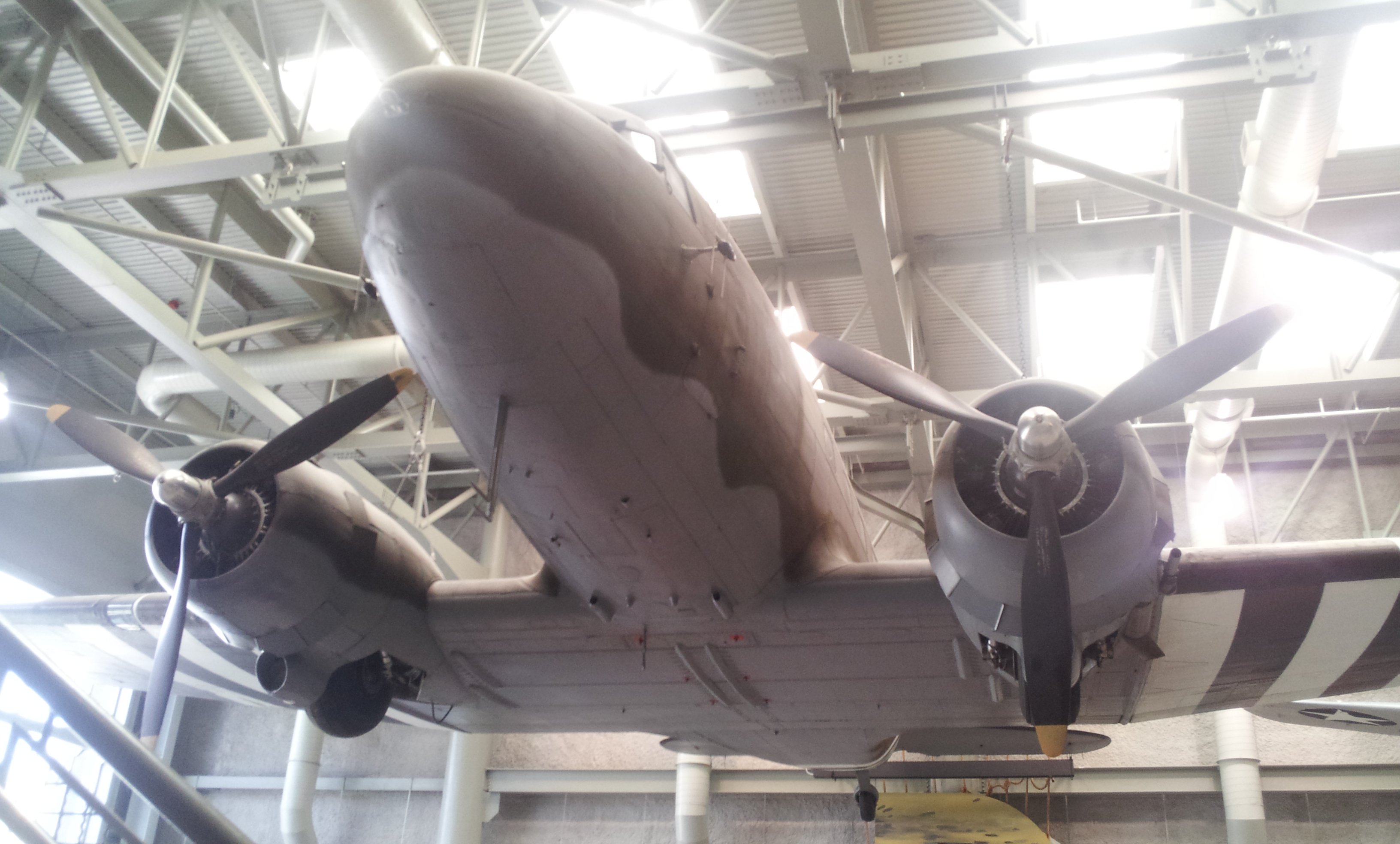
A Douglas C-47 “Skytrain” was suspended from the center of the ceiling. This particular plane saw action in the war, then bounced around from country to country and company to company before finding a home at this museum.

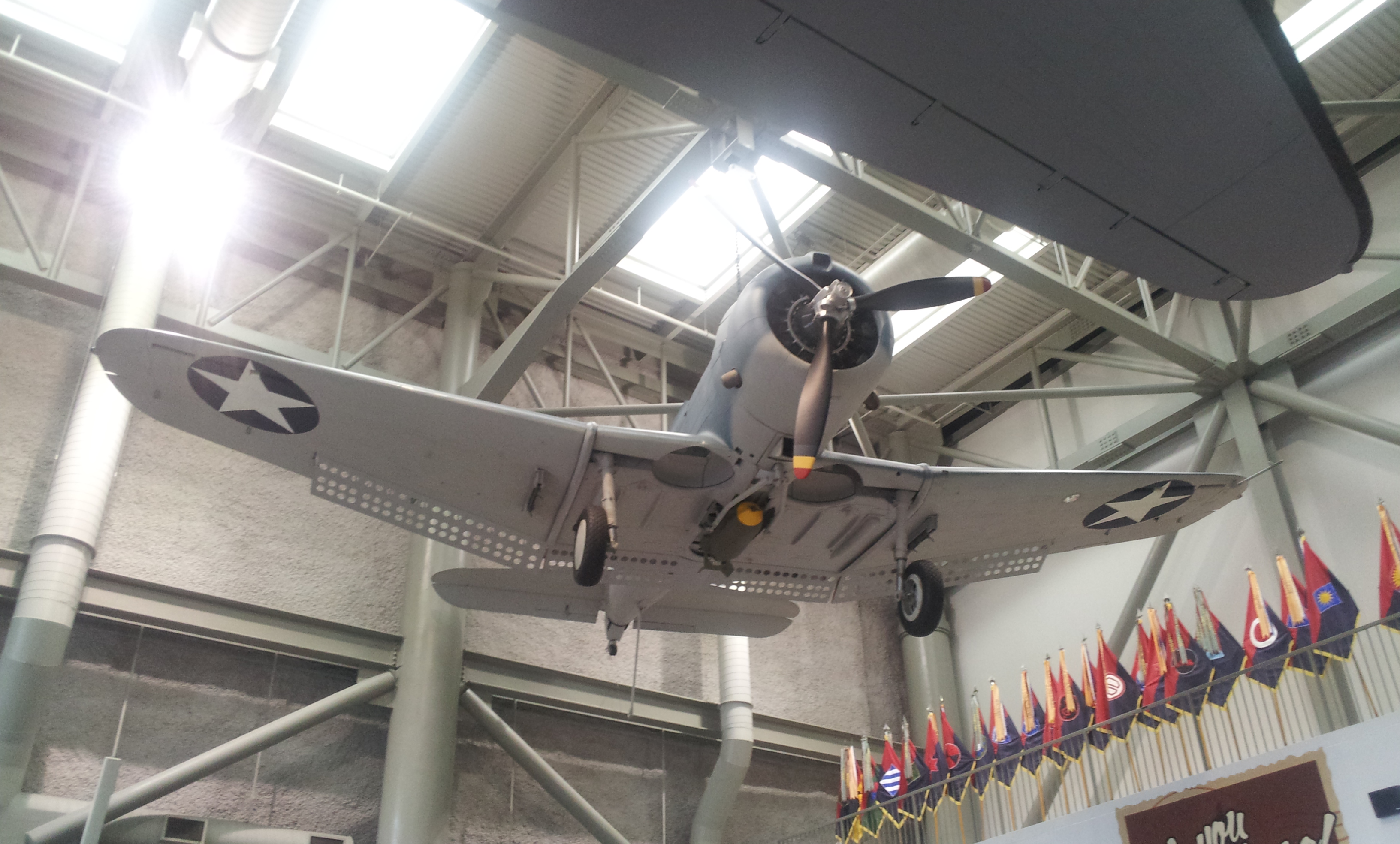
And in the corner opposite the entrance was a dive bomber, an SBD Dauntless also made by Douglas. According to the volunteers at the museum, this particular plane had spent some time in Lake Michigan, in the sense that it had to be fished out at one point. The volunteer said there were something like 100 planes still in the lake from wartime training accidents.

And here’s my attempt at getting all three in the same shot, if not all in frame:

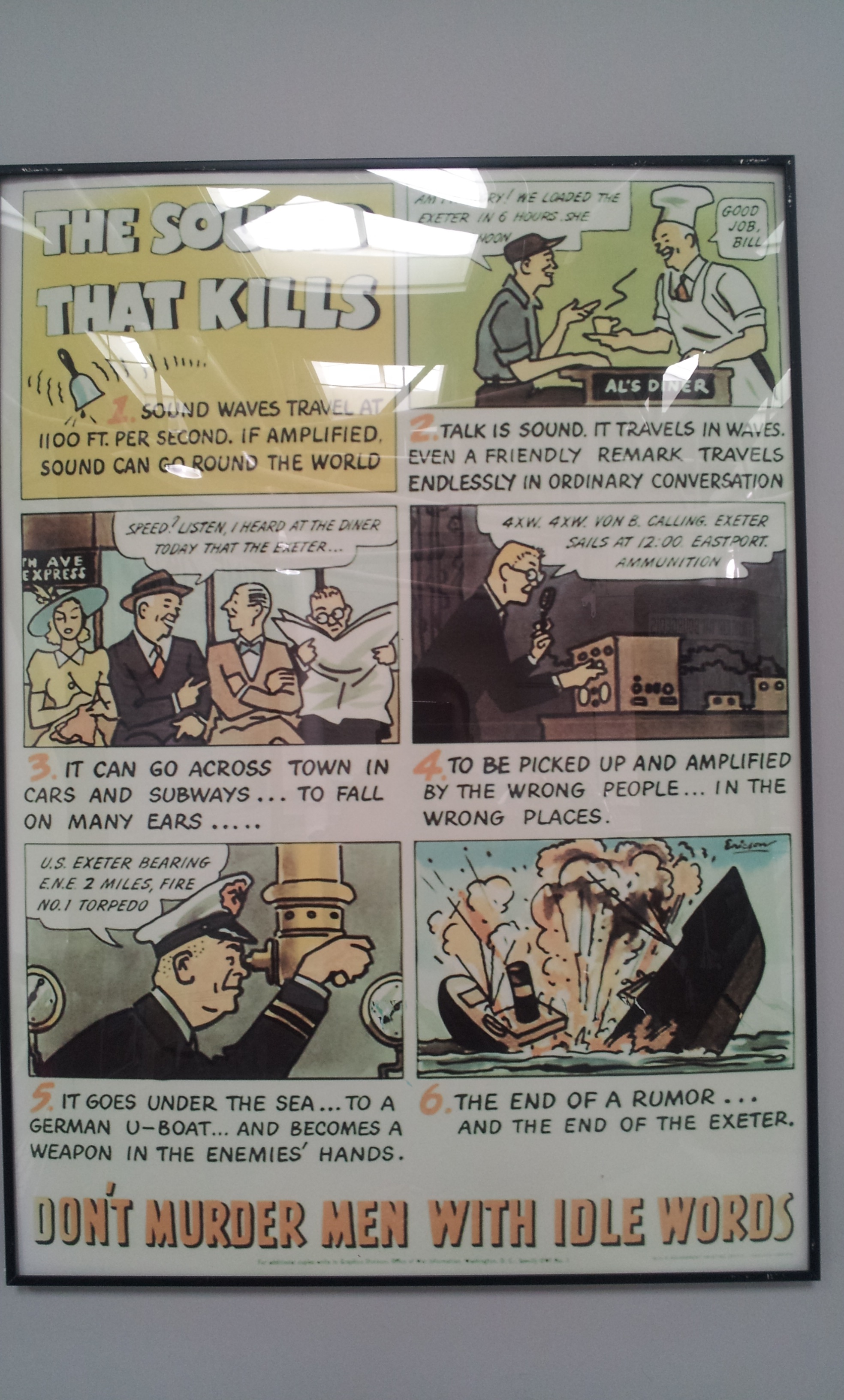
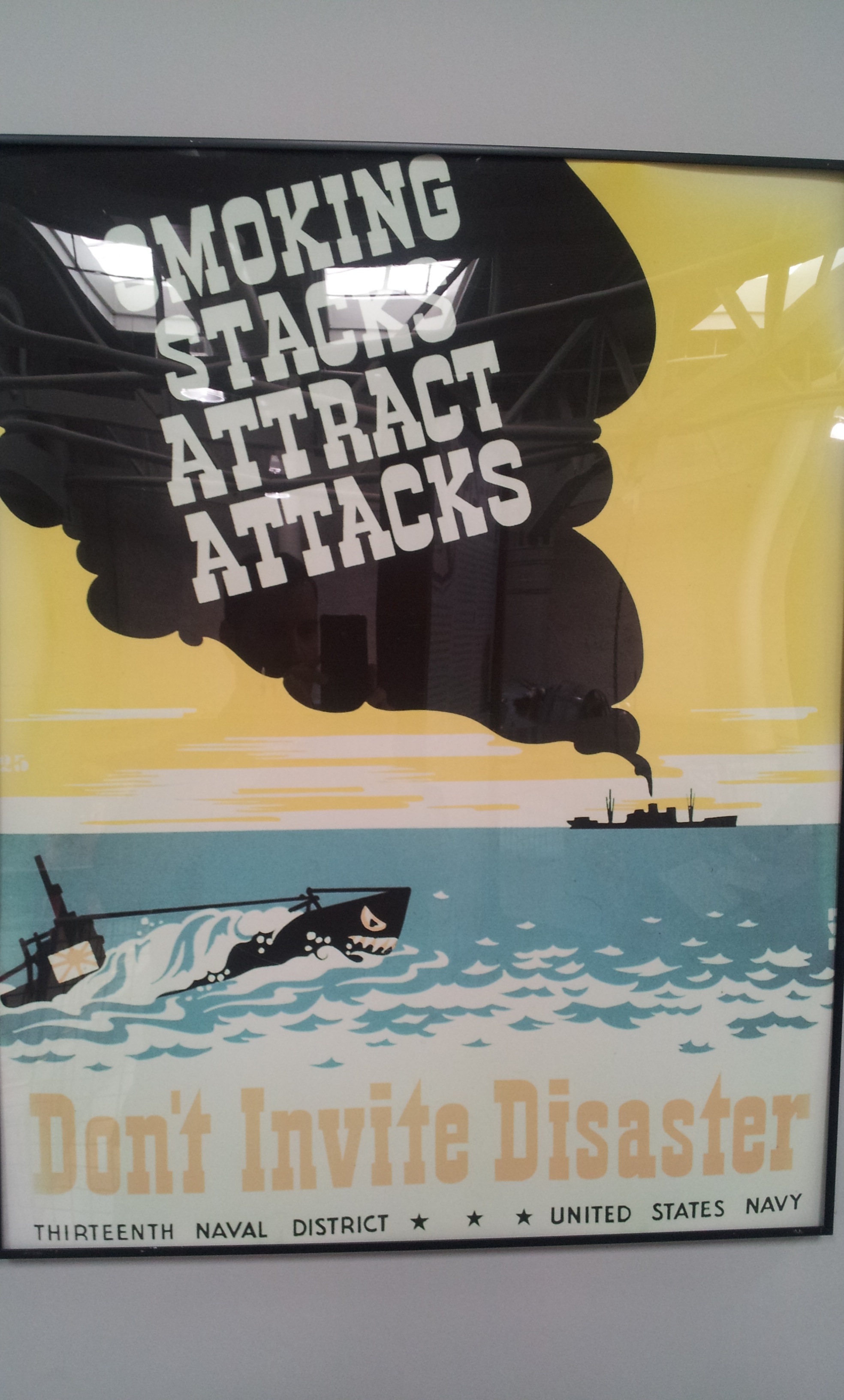
Some wartime posters in one of the upstairs exhibits:

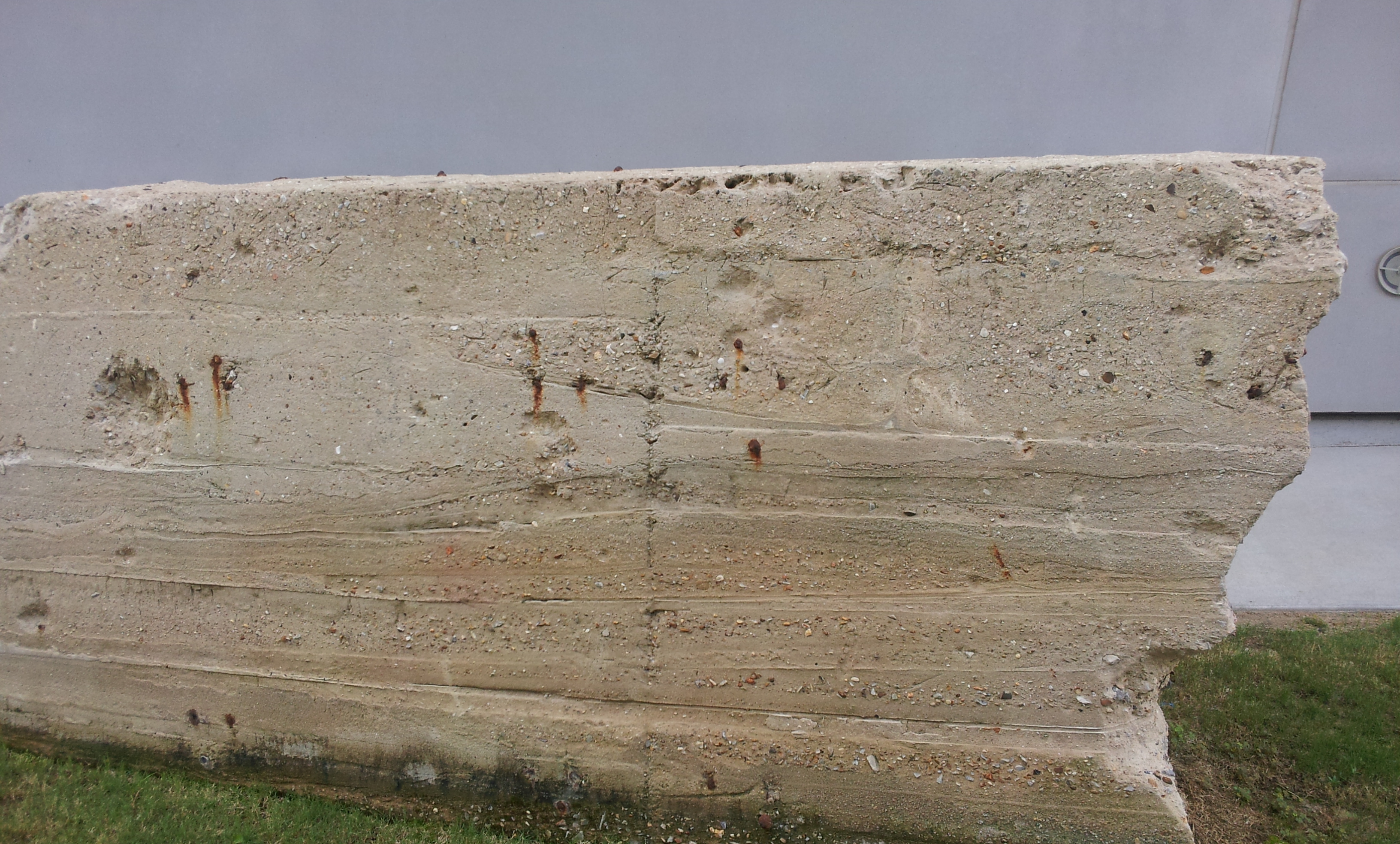
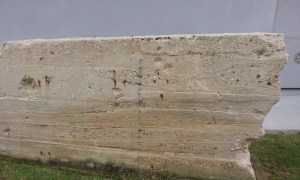
Outside are a few relics of the Nazi defense: a single-person bomb shelter and a piece of the Atlantic Wall. The shelter is a tight fit, and has a small horizontal slit on the far side for looking at whatever’s coming.

After lunch at a soda shop (huge sandwiches), we headed to the nearby Confederate Museum where, sadly, photography was not permitted. There was plenty of neat stuff in there, but what stood out most were the field medical kits. The dental kit didn’t look too much different from the ocular surgery kit, and they both looked like miniaturized versions of the amputation kit. There was also a beautiful hand-carved set of wooden chess pieces; I wish a replica set had been available for sale. Oh well.

Actually, what struck me most was how small the uniforms were. You humans must’ve gotten a lot bigger in the last 150 years or so.

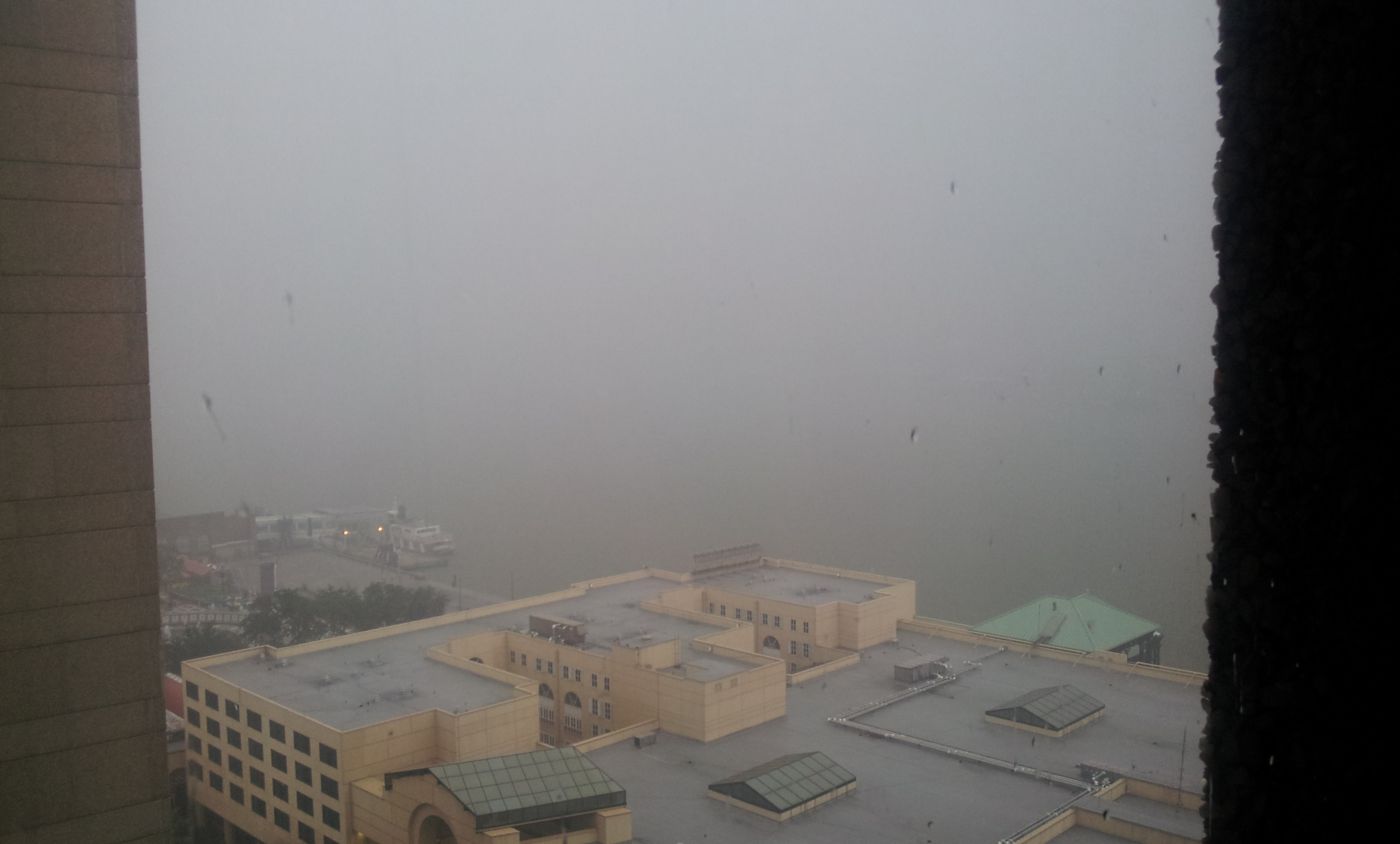
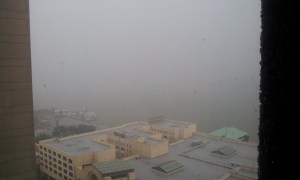
Got back to the hotel. Looked out the window, and either God finally erased New Orleans, or there was an anomalous static warp bubble experiment, or there was a really, really bad storm.
On the last day of the trip, we visited a War of 1812 battlefield. There wasn’t much there, frankly: a levee, a plantation field, a hollowed out mansion, and a memorial that resembled the Washington Monument.


Apparently the monument was designed to be another fifty feet taller, but the ground is soft enough that such a tall, narrow building would’ve sunk. They capped it at around one hundred feet.

The best thing to come of the visit to the battlefield was a brief bus tour, during which the guide gave a bit of useful knowledge about the Battle of New Orleans. The battle took place weeks after the Treaty of Ghent was signed, the Treaty called for a return to the status quo ante bellum (i.e., return of all captured territories), and so most history texts claim that the Battle wouldn’t have affected the outcome of the War of 1812. I always thought that was nonsense– there was no way the Brits would give back New Orleans once they’d taken it, treaty or not. Well, sure enough, the tour guide pointed out that the Treaty explicitly permitted hostilities up through ratification, so if the Brits had taken New Orleans, they simply wouldn’t ratify the Treaty of Ghent, and thus wouldn’t be bound to return anything to the US. Since they lost the Battle, they were more than happy to ratify the Treaty. That makes the Battle of New Orleans a lot more important than some texts suggest.

So I learned that.

The last stop before heading home was some plantation; the name escapes me. The weather was miserable, the lighting was poor, I got no good pictures, the tour guide was obnoxious, and the stories were forgettable.

There was plenty more to be seen in this little berg, but time had run out on this trip. We got in one last terrible dinner at some seafood place and then hopped on the bus for the 11-hour ride back.

New Orleans struck me as one of those towns that’d be pleasant in the winter, like a Charleston or a Savannah. Not as many tourists, not as many bugs, not as much humidity, not too hot, not too cold. All in all, twas a nice getaway.
Vacation ’12, part 2B: New Orleans, continued.

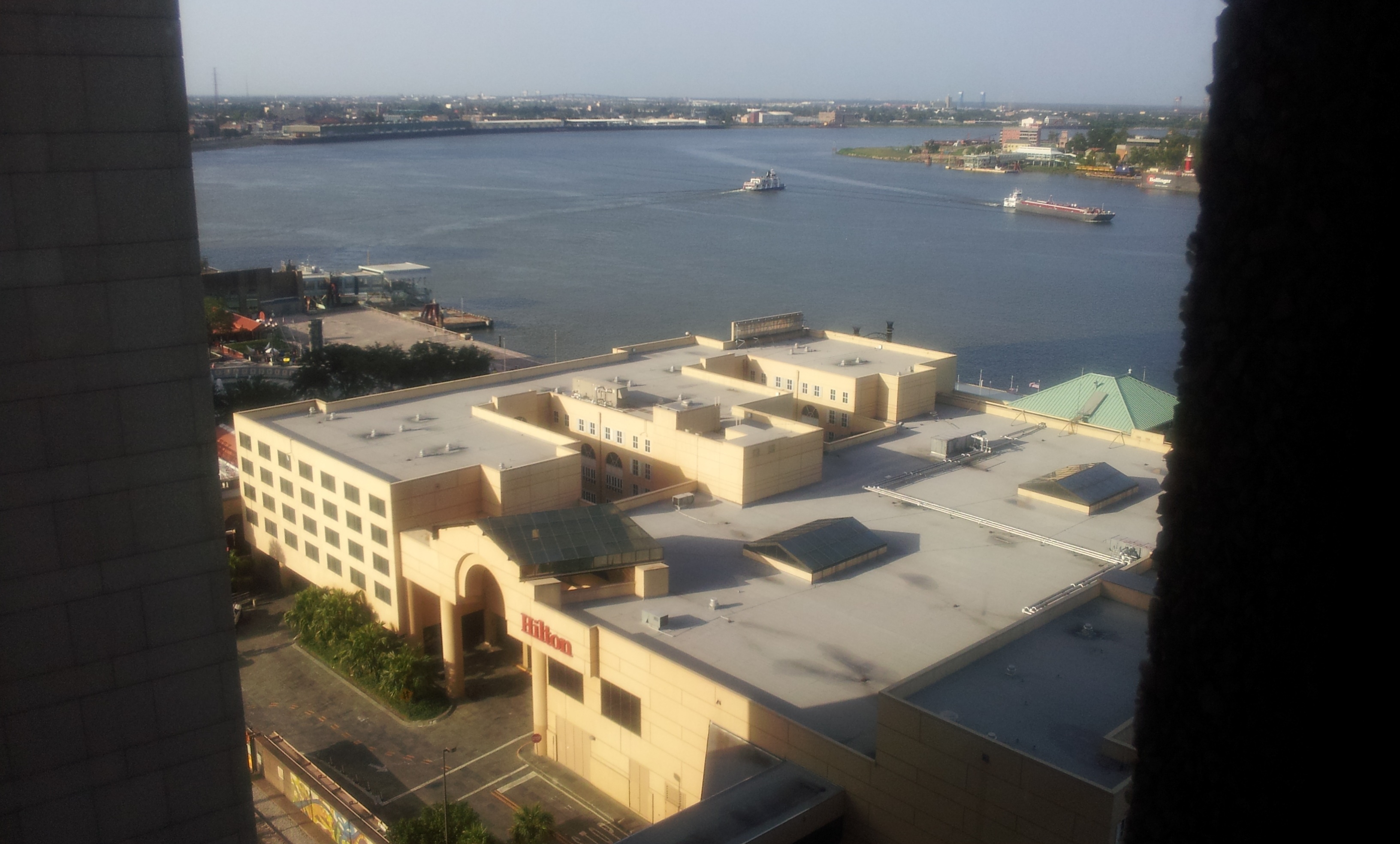
We arrived in New Orleans on a Monday night. The view of the Mississippi from my room on the 14th floor of the Riverside Hilton (click to embiggen):

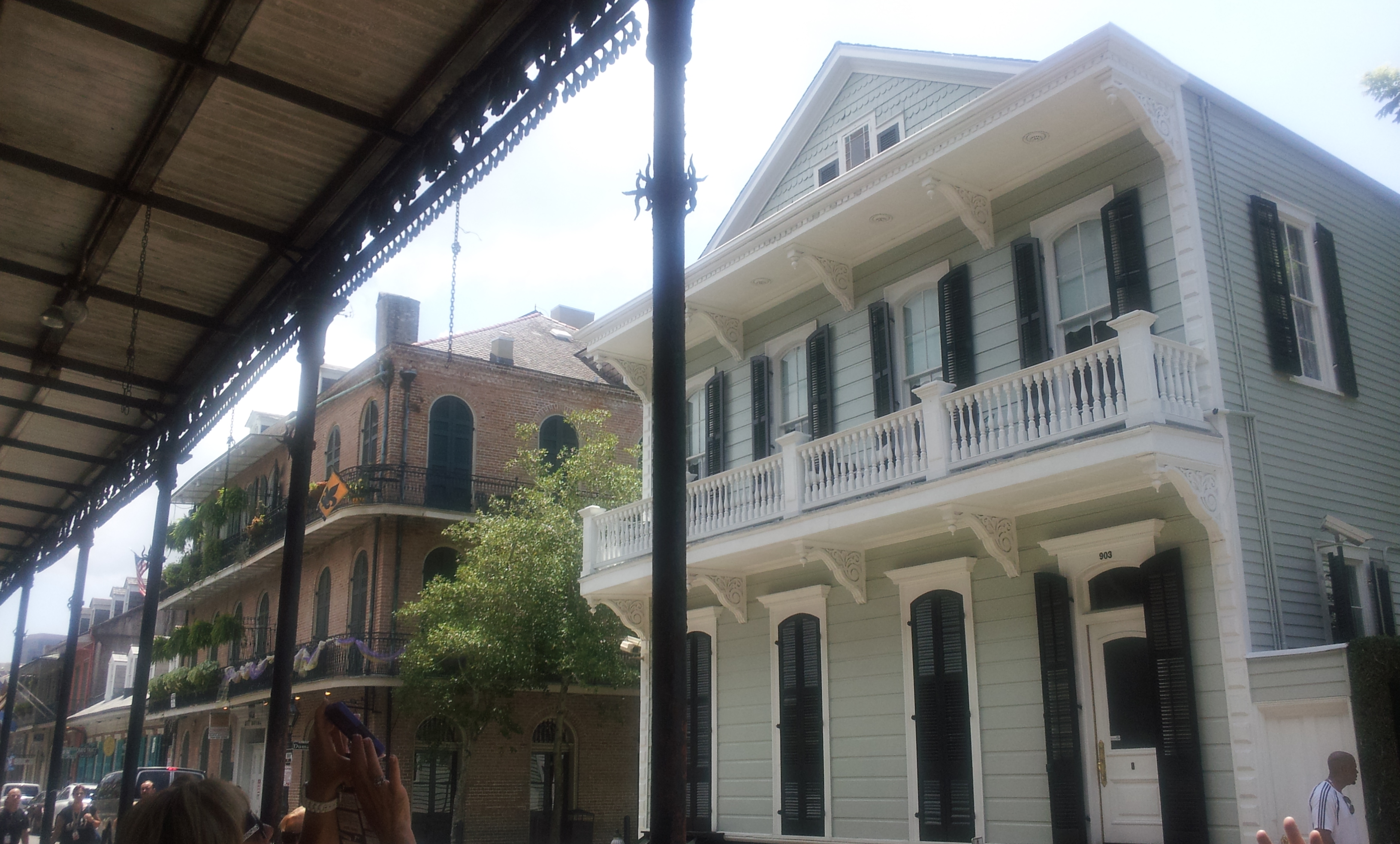
After dinner, we took a stroll down Bourbon Street, which is apparently zoned for nothing other than saloons, strip clubs, and souvenir shops. Tarot readers and voodoo practitioners peddled their wares, and porters tried to rustle passersby into their bars, and lace-clad girls seduced the lustlorn from doorways and balconies… and moms and dads strolled their babies down the sidewalks. It was bizarre. We managed to make it all the way down to LaFitte’s Blacksmith Shop– which claims to be the oldest bar in the country– and back, dignity and bank accounts intact.

Tuesday morning, we took a Katrina bus tour. We drove into the Lower Ninth Ward, which was still in pretty rough shape. Some houses were still abandoned, with spray-painted markings left over from the rescue and recovery efforts. Some had been razed and left as empty lots, badly overgrown with weeds that must’ve been five feet tall. And some, despite everything, were still lived in. There were some new houses that were built several feet higher than the older ones. One house in particular was built such that, if/when the next flood comes through, all the owner will have to do is pull four cords and voilà, his house will turn into a boat and float to safety.

The levees were unimpressive, which of course was the biggest problem seven years ago. The lady sitting next to me on the bus said she grew up in a small town on the Ohio River, and their levees were much bigger than these. I responded that some places take flood control seriously, and some places don’t. After seeing those levees, I’m not convinced that New Orleans is taking flood control seriously enough.

(Back when Hurricane Katrina hit, people would get pissed off at me for pointing out that despite FEMA’s floundering, the people who were most responsible for flood control in New Orleans were the people of New Orleans. While I’m sure nobody wanted to hear that at the time, I stood by it. They live in a great big bowl that’s lower than sea level, and because God hasn’t rained fire and brimstone on the French Quarter in all this time, it’s reasonable to assume that the city faces only one mortal danger: flooding. Only one thing can go catastrophically wrong in this city, and the city’s top priority must be stopping that one thing. The first question at every mayoral debate, every city council debate, and every press conference with every government official in New Orleans should be about the levees. If the answers are unsatisfactory, BAM! Instant recall. If/When Jacksonville ever gets hit, we’d better be ready, and if we’re not we’d better not point the finger at anyone but ourselves.)

The next stop was at St. Louis Cemetery #3. It was full of family crypts (if there was a technical term for them, I missed it) in which the dearly departed would spend a year and a day before being shoved to the back of the crypt for make room for the next relative to pass away. Having grown up in a large family, I could empathize.

Padre Pio stands near the entrance, and supposedly bore stigmata. You can see the bandages wrapped around his hands.

Here’s Jesus:

Here’s a crypt funded by a Italian mutual aid society:

More crypts:

Later that day, we went on a “ghost tour” of New Orleans. The stories probably would’ve been more enjoyable if, while telling them, the tour guide had made eye contact with anybody. He spent more time telling stories to our shoes than to us, which was unfortunate because my shoes don’t share my interest in history. Long story short: lots of duels (which makes sense given the aristocratic, European nature of the town) and lots of disappearances (which makes sense given the seedy, scandalous nature of a town that lies at the mouth of a deep and fast river).

The guide pointed out the “Romeo spikes,” put on balcony-bearing poles by fathers in hopes of maintaining the virtue of their daughters. Have a look:

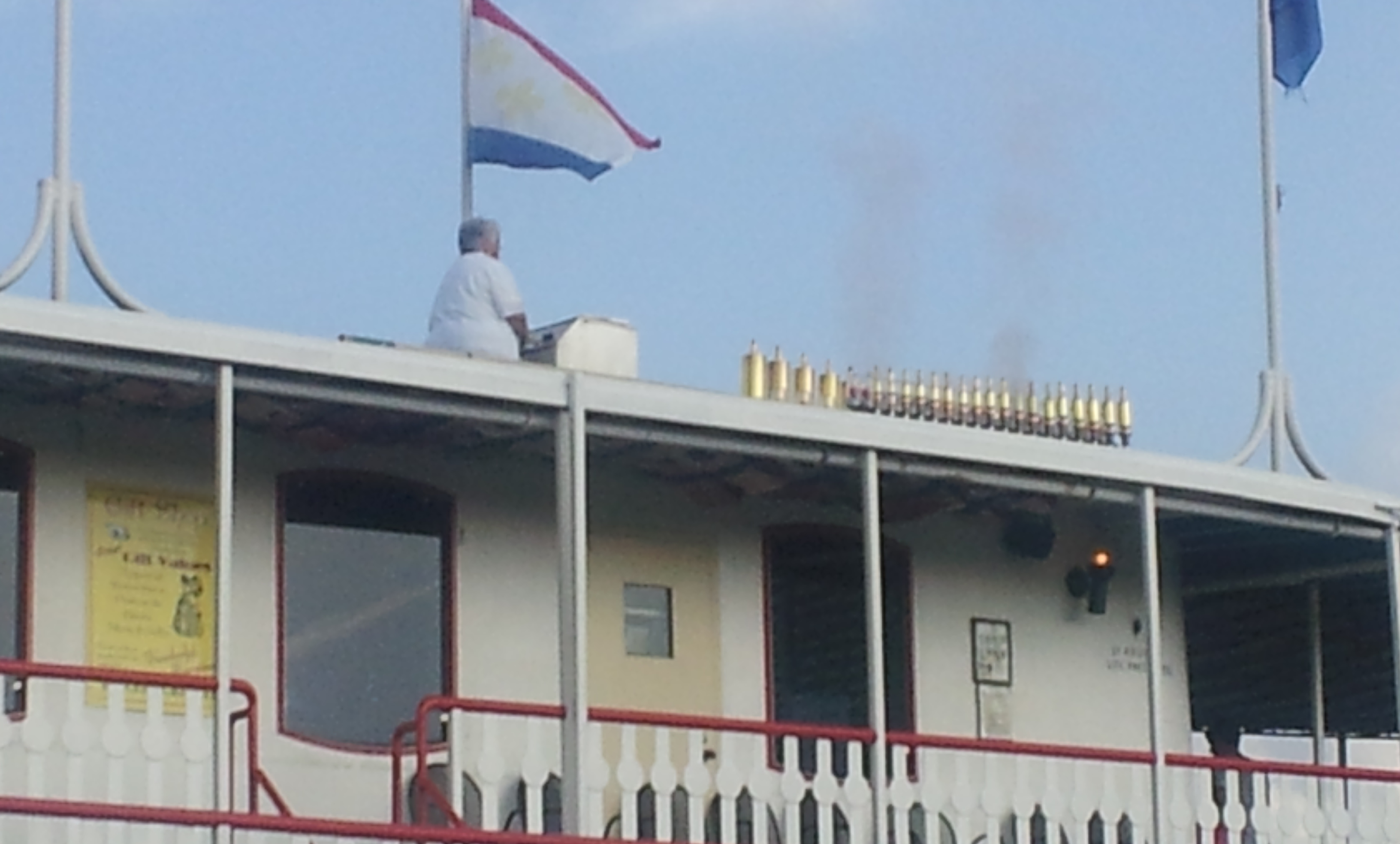
That night we took a cruise on the steamboat Natchez. While waiting to board, a little old lady played the pipes up top:

We settled in on the middle deck, just left of the bow, and consumed milk and cookies.

This was flattering:

At first glance I thought these were skulls:

The wheel in action:

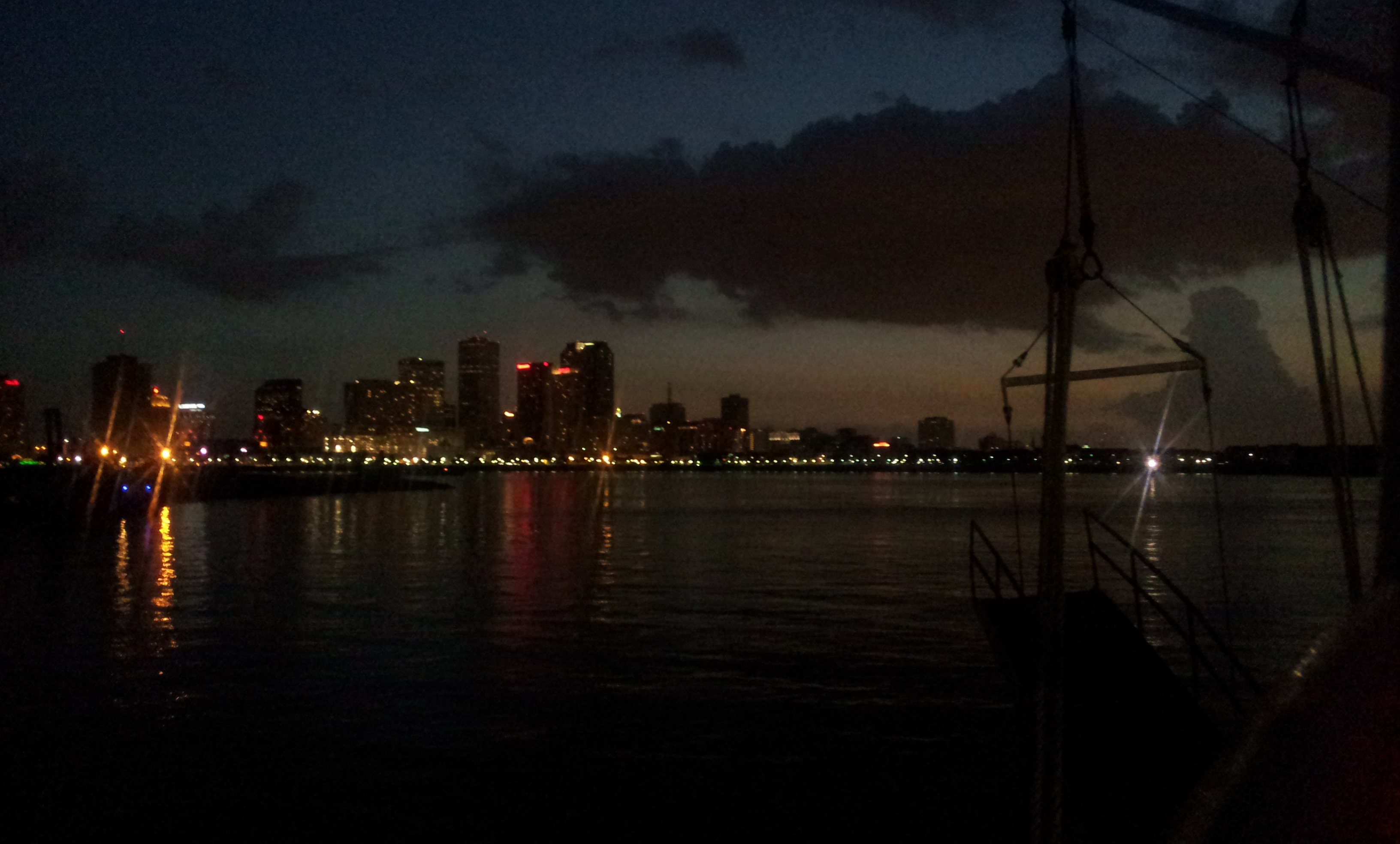
And here’s the skyline of New Orleans, from the river:

On the walk back to the hotel, I got a few shots of the ubiquitous crack-addled blue dogs (by George Rodrigue) that show up all over the storefronts of the French Quarter:

And one pic of the shadow cast by a statue of Jesus on the back of the St. Louis Cathedral, though it isn’t very good:

I need a better camera. More tomorrow.