In-state vs. out-of-state.

An anonymous reader e-mails: “I was accepted into an out of state university and decided to go there this fall. But now I’m having second thoughts. Should I stay in Florida instead? Why did you decide to pick Clemson instead of staying in state?”

This question is eerily similar to one posed by a former student five or six years ago. Out of sheer laziness, I went through my old e-mails, found my response to the eerily similar question, and made some minor changes. Here’s my warmed-over response:

The short answer is that I always knew I wanted to leave Florida, partly because I wasn’t really happy about moving here in the first place (when I was 8). I think it was a bit of leftover Yankee snobbery– which was ironic since I would end up bunking just a few hundred feet from the home of John C. Calhoun.

The longer answer: when I was a freshman in high school, a lot of my classmates already knew where they wanted to go to college and what they wanted to do. I knew that most of them would change their minds, but at least they had plans. And I figured it was better to have a plan that might change than to have no plan at all. So I picked a career and a school and go with them, unless and until a better idea occurred to me.

I’d heard of Clemson because they had a good soccer program, even though I knew I wasn’t going to play soccer in college. I also knew they had a good engineering program (at the time, the plan was to be an engineer), and I had a couple of friends from Virginia who would probably attend. Then my cousin’s best friends got accepted there, and one of my 11th grade teachers said she was an alumna, and so on. It became my default college.

While I did apply to several other schools (none in Florida), I never really considered going anywhere else. The clincher was that Clemson offered me a full scholarship before any other school had even sent an acceptance letter.

In retrospect, not applying to Florida schools was very risky: what if I simply couldn’t afford to go out-of-state? Never mind, I wanted to leave, and that was that. But if I were in high school today, I’d definitely apply in-state because there are two incentives to stay in Florida that are stronger now than they were back then:

1. Florida’s universities are increasingly reputable. Bigger applicant pools have allowed them to select better students and attract better professors. To be frank, this is partly a byproduct of the strong athletic programs.

2. The Bright Futures program makes it more likely that successful Florida students will attend Florida schools.

If you stick to your decision to leave Florida, I can almost guarantee that come October, you’ll feel homesick and think about going back (I did; midway through my freshman year I applied to UF and FSU). When you feel those pangs, ignore them. It’s not that Florida is a bad place; it certainly isn’t. But it is important to live away from home for a few years, partly to challenge yourself, partly to cultivate your independence, and partly to build an appreciation for the home you left behind. You can always return later.

Whatever college you choose, once you’ve made your decision, don’t waste a second worrying about the other colleges you could have attended. If you work hard and keep the grades up, those other colleges will still be there for grad school or your doctorate.

I hope it helped the first time around, I hope it helps this time around.

Happy 102nd (take two)!

Gram would’ve turned 102 today. At first, I honored her by posting the following picture of her dad and three of her seven siblings, thinking that she was holding the pickaxe:

But then it was pointed out that the axe-monger is actually Gram’s younger sister, Nancy. I don’t know exactly what is going on here, but I’m sure it was perfectly innocent and legitimate. I’d like to know where her other brothers were that day, leaving their sisters to toil with axe and barrow. The father looks a little ticked.

So I will now try again by posting this picture of Gram and me a few years ago:

I don’t know why the first aid kit was there on that particular occasion. Anyhow, now that I’m fairly confident that the woman in this picture is, in fact, my grandmother… Happy birthday, Gram! In your honor I shall now dine at an Italian restaurant and criticize the chef.

Soirée.

An afternoon nap dream:

It is night. I stand outside a mountaintop villa. Parts of the villa hang over the slope and are supported by broad stainless steel beams. The walls are mostly floor-to-ceiling glass, and reveal a well-lit, simple modern interior. No one is inside.

The hosts, a married couple of bankers, had given me a piece of paper with the entry code. I punch in the code, the door unlocks, and I walk in.

I wander around the main room. The bar is set up, hors d’oeuvres have been laid out, but I don’t touch a thing yet. Art that I wouldn’t call art adorns the walls. I wander from picture to picture and with no one there to explain to me why I don’t get it, I fail to appreciate any of it. I assume the hosts like it since they bought it and that’s good enough for me. I sit down in a low-backed chair with no arms.

A line of 15, 20 people, presumably the hosts’ friends and coworkers, arrive and let themselves in. I have never seen any of them before. I stand and tell them that the hosts gave me the code. They walk in a line from the door to me, and after some awkward introductions they continue the line to the bar, the food, and into another room.

The difficulty is that most of the new guests speak with foreign accents so thick I can’t make their names out. Between them trying to explain their names and me trying to explain mine, the queue to the bar/food/other room develops some big gaps.

An older woman with a shock-white crew cut and a deep French accent says to call her something that sounds like a gasp for air. Her name isn’t even “eh.” When I say it back to her, I somehow get it wrong and she spends a good minute or two correcting me before I direct her to the bar and tell her to enjoy herself.

A short black man says to call him “one sixty two.” I ask him to repeat himself. He says “Yep,” and continues to the bar.

A Nordic-looking man with blonde buzz cut and heavy black-rimmed glasses shows me a business card with a strange symbol on it: a circle with two right-facing parentheses attached, one at the top, one at the bottom. I ask what it is. He says it’s his name. From then on, I just pretend to get everybody’s name the first time.

I sit down and wait for the hosts to arrive. Somebody opens a door and lets out the hosts’ border collie, which runs around the house. No one pays it much attention.

Somebody opens another door and lets out the hosts’ pet elephant. Again, the other guests don’t pay it much attention, but I am shocked at seeing an elephant. Then the shock of seeing an elephant is superseded by that of seeing an elephant indoors, which is superseded by that of seeing an elephant indoors on top of a mountain, which is superseded by that of the strange appearance of the elephant. It is the skinniest elephant I’ve ever seen, thin enough to easily fit through a standard interior door, though it has to duck its head down to do so. It looks like a gigantic greyhound with a narrow elephant head instead of a dog head.

The dog picks a play-fight with the elephant. He jumps at it, he rolls around in front of it, and the elephant goes easy on him, clearly aware of the difference in size and power. After a few minutes, the dog gets the elephant to chase him around the room. The elephant is faster and nimbler than I expect. They knock nothing over and disturb no one. The other guests barely notice and chatter away.

The dog leads the elephant into a narrow hallway, then stops and cuts back between the elephant’s legs and into the main room. The elephant turns too quickly and bangs his head on the wall. The building shakes.

The guests hush. It takes a second or two for the pain to register, then the elephant cries and mopes and stumbles into the main room. He flops over and again the building shakes. There is no blood, but there’s already a bump on his head. He whimpers as the guests rush over to him and pet him.

The dog wanders over, ears heavy with guilt, and checks on his friend. The dog starts licking the bump on the elephant’s head. The elephant stops crying after a while, but stays on the floor and basks in the attention.

The hosts have still not arrived.

No idea.

Happy 112th.

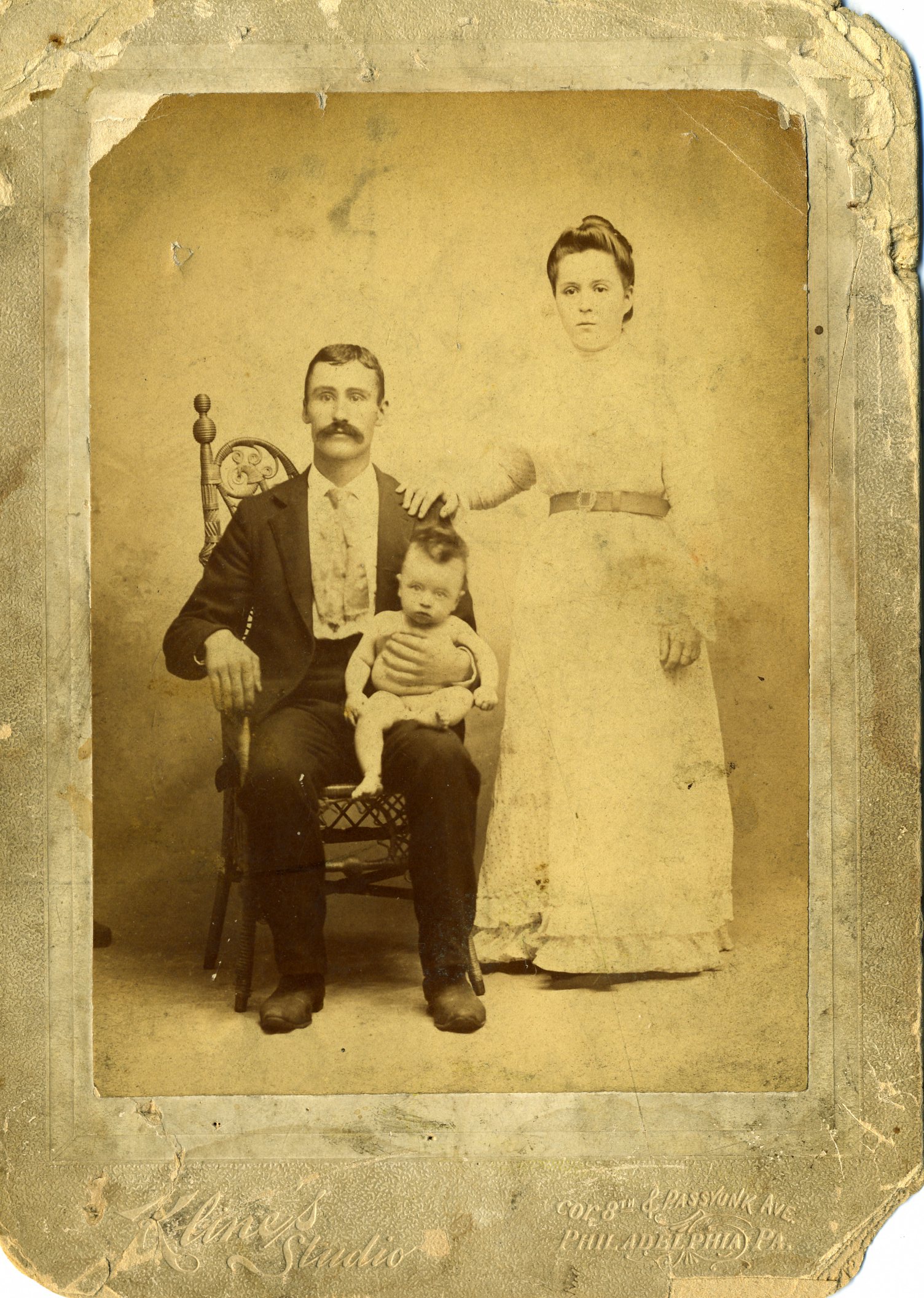
Today is my grandfather’s birthday. Here’s a picture of baby Grampa with his parents in 1900:

When this picture was taken, McKinley was still President. There were only 45 stars on the flag. Airplanes, televisions, and electronic computers didn’t exist, and telephones were luxuries. Einstein hadn’t published his paper on relativity. The keel of the Titanic hadn’t been laid. The Cubs hadn’t won their back-to-back championships. Oil hadn’t been discovered in the Middle East. The Great War was still years away.

What strikes me most about this picture is that every last strand of that insane-lookin’ hair was still anchored to his scalp on the day he died. I don’t think I’ve ever seen a haircut like that on a baby.

Grampa would’ve turned 112 today if he hadn’t died repairing the ship’s antimatter converter.

On Obama’s policies.

An anonymous reader e-mails: “What do you honestly think of President Obama? By this, I mean his social and economic policies of course, not of him as a person.”

I am, on net, not a fan of President Obama’s social and economic policies. To keep this simple, I’ll just list some of his policies and call them either good or bad. (Before anyone jumps in with “but Bush did the same thing!” or “but Clinton would have done the same thing!” or “but McCain would have done the same thing!” or “but Romney wants to do the same thing!”, let me say: yes, I know. And it was, would have been, or will be just as good or bad when he, she, or it did, would have done, or will do it.) Here goes.

He granted waivers from No Child Left Behind. That’s good. He’s pushing Race to the Top. That’s bad.

He repealed “Don’t Ask, Don’t Tell.” That’s probably good. I don’t believe there’s a fundamental right to serve in the military, but if the military functions better without DADT, then good.

He lists “empathy” as a criterion for his judicial nominees. That’s bad. Or rather, that’s bad if he considers empathy more important than, say, “impartiality” or “knowing what the Constitution says” or “understanding legal precedents.”

He put Joe Biden a heartbeat away from the Presidency. That’s bad. That’s real bad. He got Joe Biden out of the Senate. That’s good. That’s real good.

He vetoed the Keystone XL pipeline on what I think are flimsy grounds. That’s bad. He expanded oil drilling in Alaska and the Gulf of Mexico. That’s good.

He is pursuing policies that over-promote alternative energy. I editorialized by using the modifier “over,” which is a pretty sure sign that it’s bad. He approved construction permits for nuclear power plants. That’s good.

He opposed using secret ballots to vote on unionization. That’s bad. He made free trade agreements with South Korea and Colombia. That’s good.

He supports net neutrality. That’s bad.

He continues to prosecute the drug war. That’s bad. He has not stopped the raids on medicinal marijuana dispensaries in states that have legalized them. That’s bad.

He wants to raise the top marginal income tax rate. That’s bad. He hasn’t actually done so. That’s good.

He campaigned on raising capital gains tax rates. That’s bad. Now he’s talking about lowering the capital gains tax rate from 35% to 28%. That’s good.

He wants to raise the minimum wage. That’s bad.

He bailed out auto companies. That’s bad.

He passed the “cash for clunkers” bill. That’s bad.

He passed the Patient Protection and Affordable Care Act, a.k.a. “ObamaCare.” That’s bad.

He has not delivered anything even remotely approximating the “net spending cut” he promised throughout the 2008 campaign. That’s bad.

He passed a massive economic stimulus bill. (Here’s where the economist in me moves away from “good” or “bad.”) I think it is somewhat responsible for lowering U-3 unemployment, but I am increasingly convinced that it was not worth the cost. I believe less and less in stimulus as time goes on– the Bush stimuli didn’t seem to do much, and the Obama stimulus hasn’t done much unless you genuinely believe that the economy was so much worse than anyone ever could have imagined that the stimulus was necessary just to keep us afloat. I don’t buy that.

In short, I think the bad outweighs the good, and he should have spent a little more time visiting and actually listening to the econ department while he was at Chicago. Fire away.